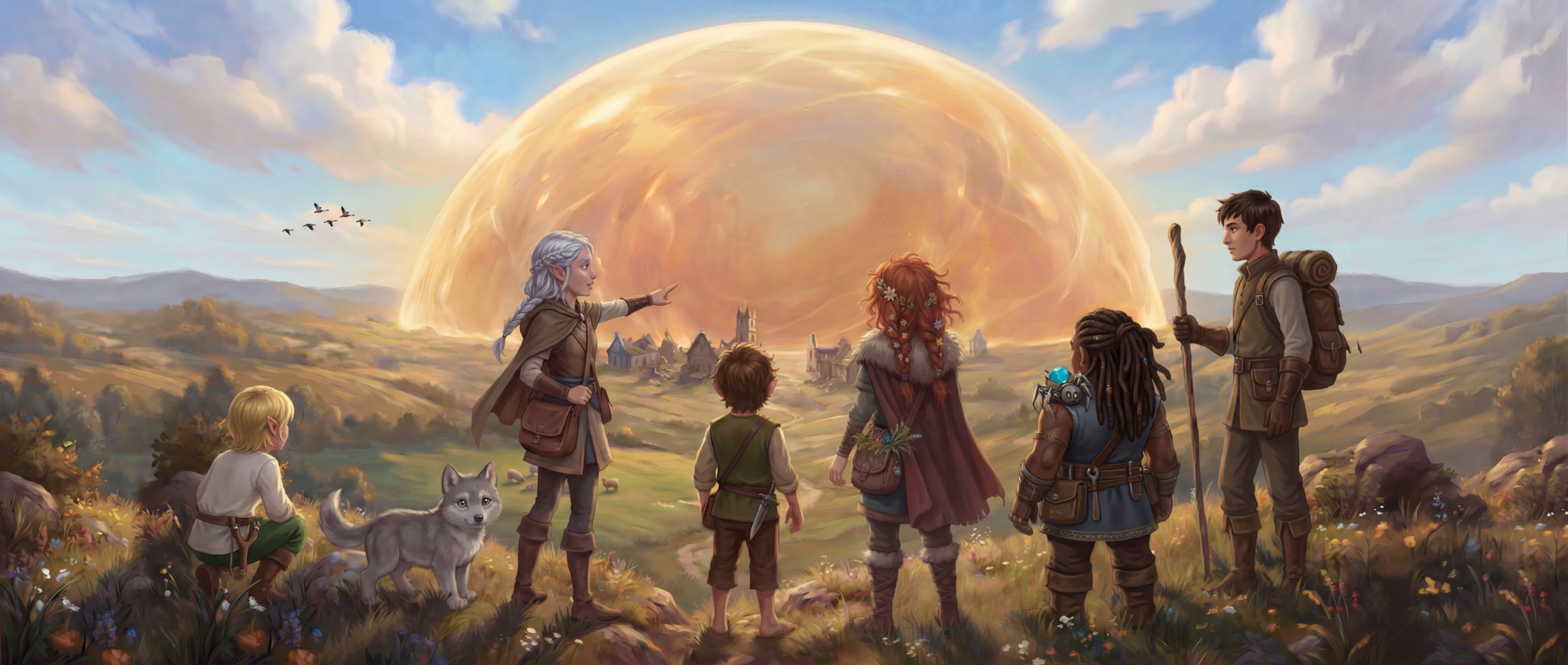
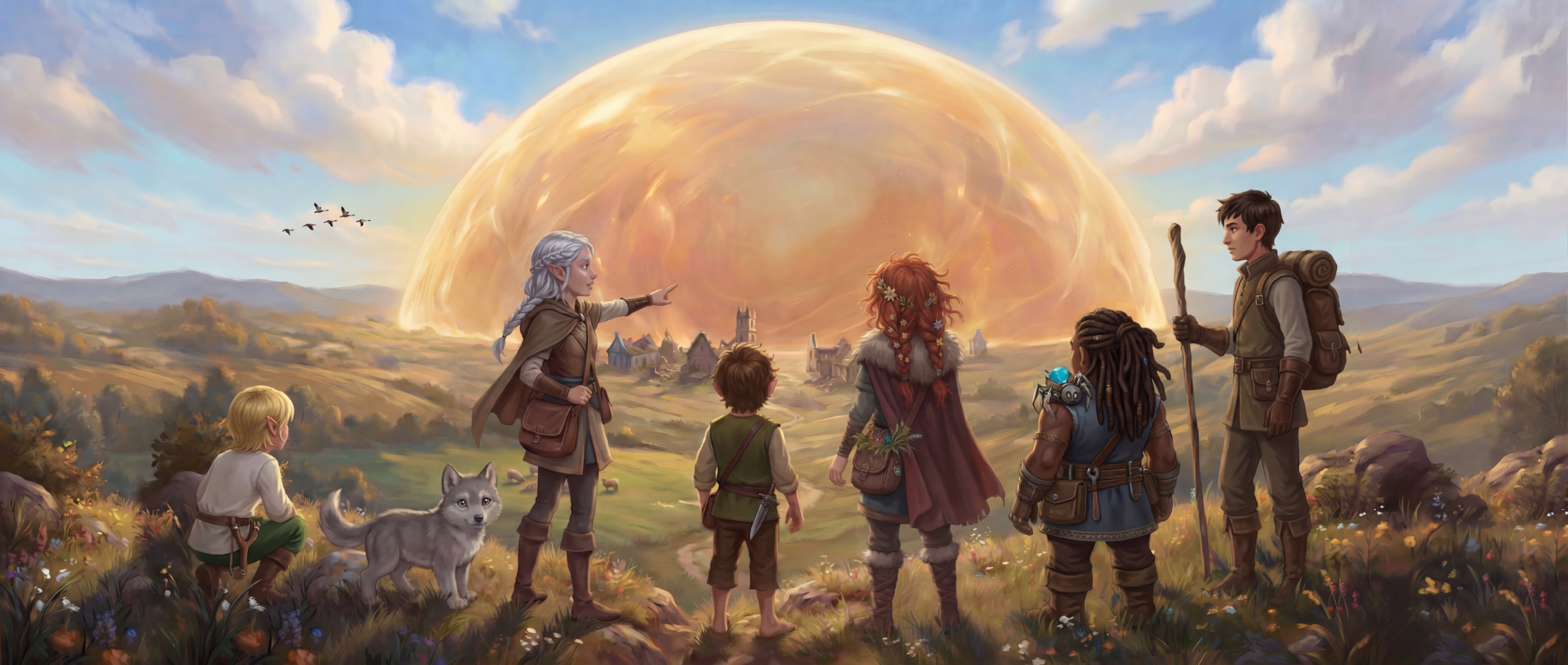
The first time I played HeroQuest, I was a teenager. I remember playing with my brothers and friends, sitting in a dimly lit room at midnight, while suddenly the door opened to reveal an empty and dark stairwell. Today I know that the old door was warped and the wind probably pushed it open, but back then? Pure goosebumps. I'll never forget that.
The second time, I watched my kids discover HeroQuest. I remember opening that old box and dusting off those miniatures I painted as a teen, discovering the pieces with them. And I remember the spark in their eyes and their jubilations when they defeated my monsters — of course I had to be the Dungeon Master — or when they discovered a chest and hidden riches.
Somewhere between those two moments, years apart, I started collecting ideas. Sketches in notebooks, rules on orphaned pieces of paper, a folder on my computer that grew slowly and went nowhere.
And somewhere along the line, the ideas got a name: Weezards.
It came from an old browser game called Weewars — small, simple, but somehow deeply satisfying. The kind of game that earns your attention without demanding it. I wanted to build something like that, but deeper. Something that could grow.
My biggest problem was that I could never pull my thoughts together long enough to make real progress. Game design requires a kind of sustained coherence that scattered evenings, a full-time job, playing music or handball, and fatherhood make very difficult.
Then someone close to me said: "Just tell ChatGPT about it."
That was late 2025.
The first sessions were electric.
I described my ideas — cooperative dungeon crawling, modular rules, hero progression — and GPT-4 reflected them back in ways that sharpened them. It was the most useful brainstorming partner I'd ever had. For a few weeks, I felt like I was finally building something.
And then the cracks appeared.
The system kept contradicting itself. An ability I'd designed three sessions ago would resurface in a new form, incompatible with what we'd built since. The rules were growing faster than I could track them. I'd spend hours re-explaining context that should have been established weeks ago. The AI ranged from brilliant brainstorming partner to illiterate intern. There was no authorial control. I was chasing my own project.
It was so incredibly frustrating at times that I nearly stopped more than once.
But here's the thing about spending years as a Product Owner and being stubborn as a mule: there is always a reason for a broken system. Always an explanation for why something fails. And when a process creates the same problem repeatedly, you don't stop. You start looking and analyzing and then redesigning it.
So I did.
Building the infrastructure.
I looked for tools to keep all my files structured and organized, and found Obsidian. I brainstormed with the AI to learn the best way for it to retain information and built a vault architecture from scratch: POINTER files linking to versioned MASTER documents, a policy file, an index, a behavioral specification for the AI that I updated and versioned like any other system component.
I connected it to GitHub. I found an AI agent platform where I could build custom agents and skills tailored specifically to Weezards, automating repetitive parts of the design process and keeping the AI consistently in context. And I wrote Python scripts to automate exports and dungeon map rendering. Then I wrote more Python scripts, because the first ones weren't enough.
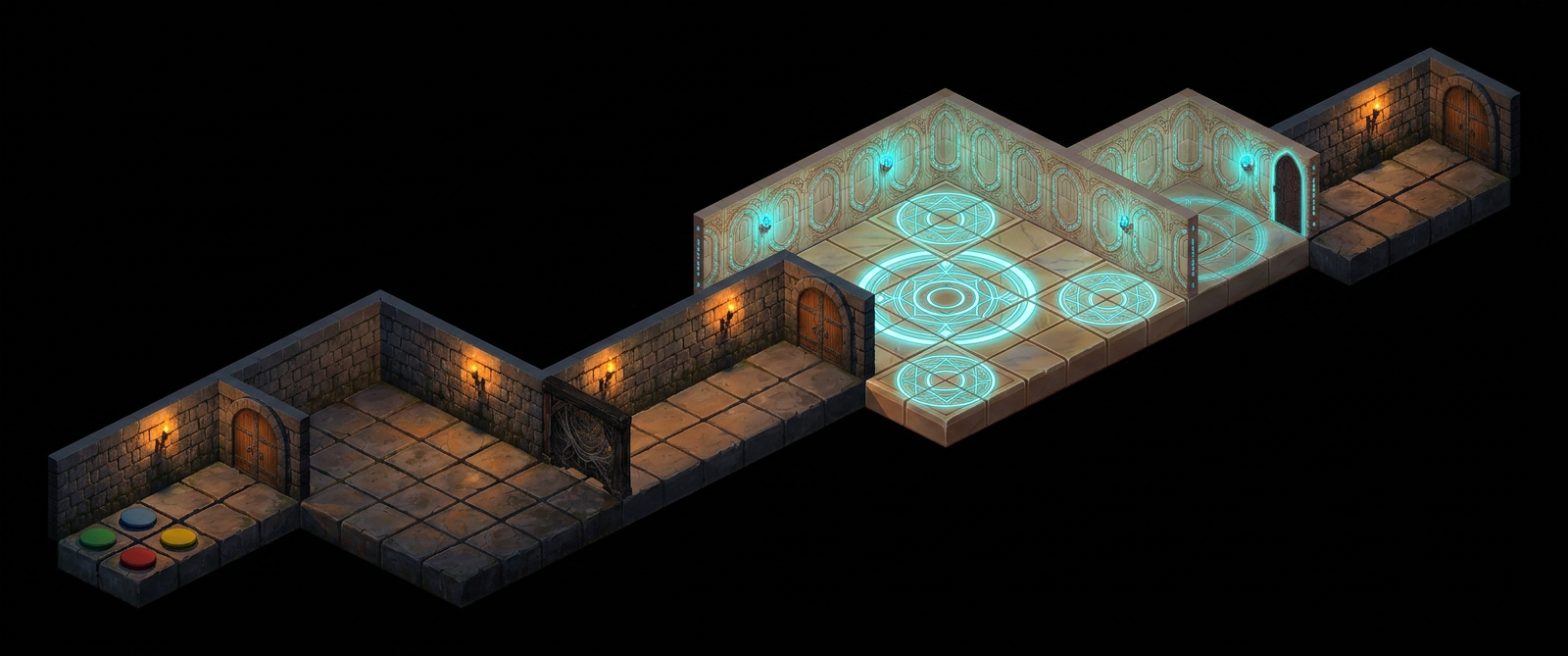
What started as a creative hobby had turned into a production infrastructure where I can generate vault exports or fully textured, isometric diorama images in seconds. I didn't plan that, but looking at it now, I think it was inevitable.
Four weeks later, I had my first real export.
A single HTML file. Version 1.0. An 8x8 grid: a yellow square representing the hero, a red square representing the monster, two buttons. A few mechanics, rough rules, some paragraphs of lore. That was it.
I remember thinking it looked embarrassingly basic. But it motivated me to continue, because that file represented more progress than all the years before combined.
And here is what prompted me to start all this:
It always bothered me about games — including the ones I played as a kid and with my kids — that they stopped growing. You buy Andor Junior. Then the children age out of it, so you buy Andor. And then you play it, but it doesn't have the same charm. So you shelve it again while the kids continue to age out further.
But why not design a foundational game that starts accessible for a young audience and then scales with the players? Why not build something that earns a permanent place on your table instead of being retired when it gets too easy?
That's what Weezards is trying to be. A cooperative dungeon crawler for 1 to 4 players that starts approachable and scales in depth through optional mechanics that players choose to activate themselves. Not a junior version of something bigger. The base game is a foundation that grows.
Six months later, the vault contains 124 files.
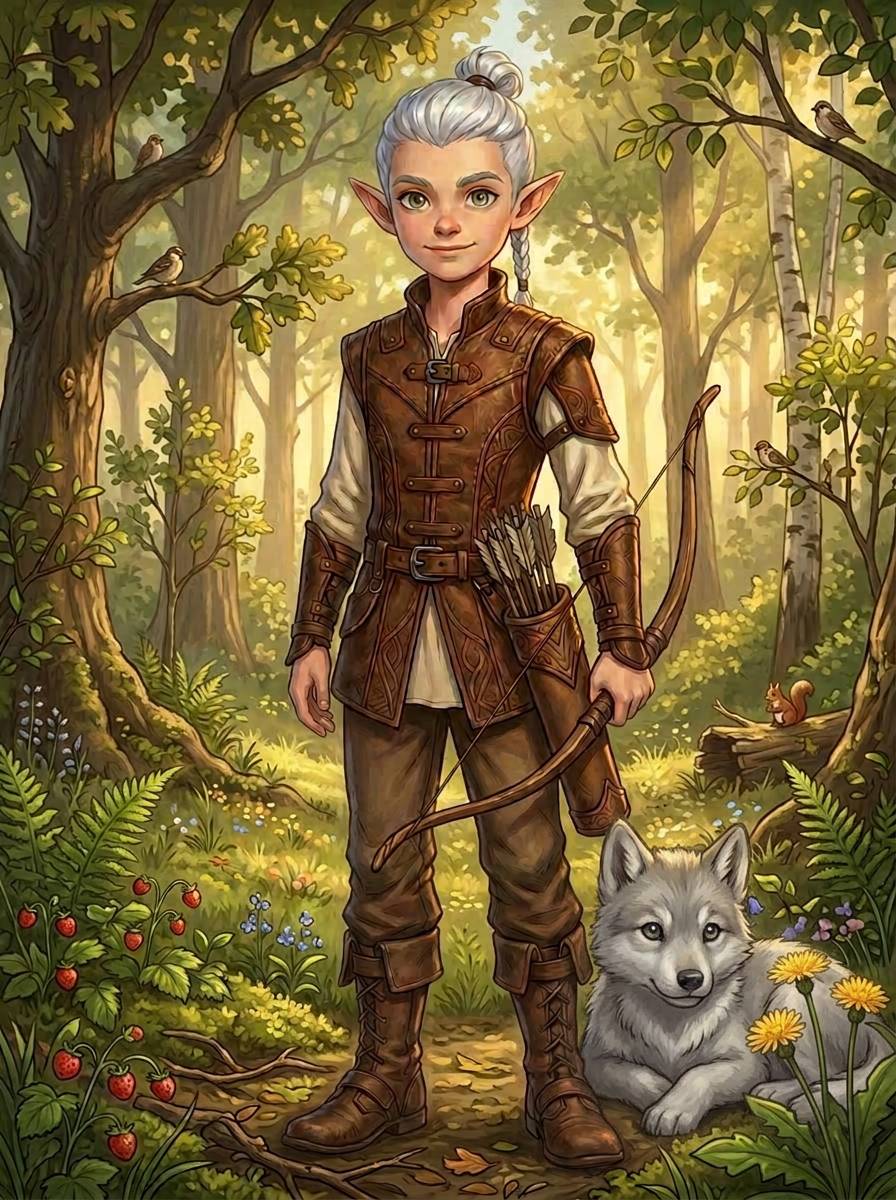
Six playable races with character art. Twenty-plus individually designed monsters. Three-tier skill trees across four attribute lines. A full campaign with multiple missions, the first of which went through eleven iterations before it felt right. Twenty-two Python scripts. Design guides. A glossary. A world with a history. Add-ons and alternative game modes as early concepts for the future.
I built all of this while working, while being a father, and while learning game design from scratch. Using AI as a tool, fighting AI as an obstacle, and eventually turning that friction into a system that works.
I'm not going to pretend it was smooth. There were evenings where nothing was consistent and I closed the laptop wondering why I was still doing this. There were design decisions I reversed four times before they were right.
There are still open questions I'm bringing to playtesters.
But the game is real. The world is built. The pieces are made.
Weezards is finally live.
If you want to follow Weezards on its way to Kickstarter, you can pledge your watch at weezards.de. I'll send an update when playtesting begins.